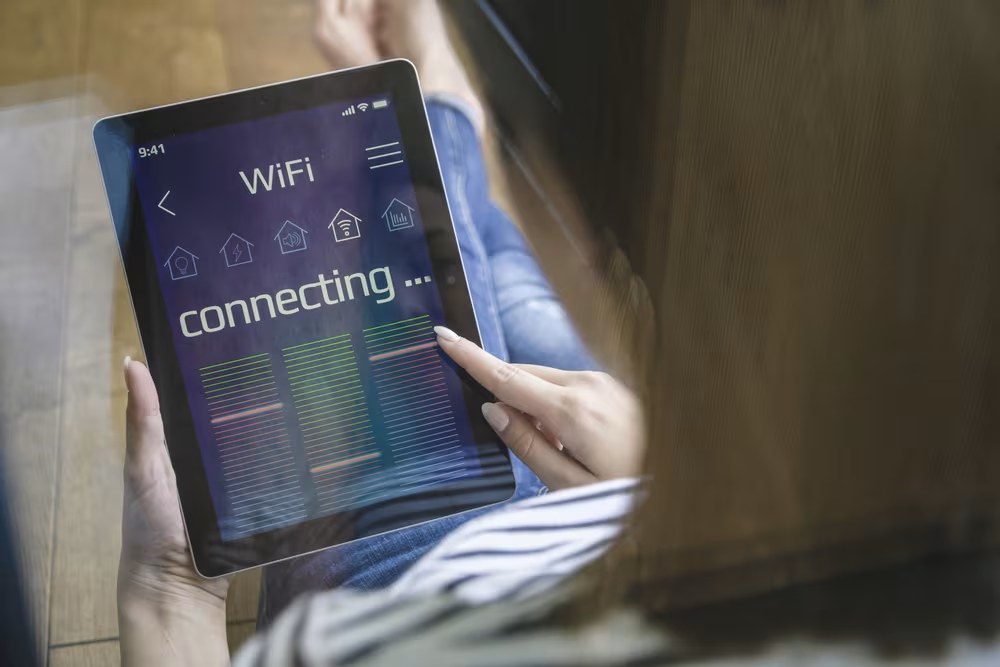
Managed wireless network supporting secure business connectivity and reliable Wi-Fi access.

29/09/2026Category: Infrastructure

Everything You Need to Know About WLANs

Introduction

A WLAN is a wireless local-area network that uses radio technology instead of a wired connection. You're probably thinking, isn't that just Wi-Fi? Just like all thumbs are fingers, but not all fingers are thumbs, Wi-Fi is a type of WLAN,  but not all WLANs are Wi-Fi. Wi-Fi is simply the most commonly used type, and with today's modern lifestyle, managed wireless services are often the first choice for companies. A poorly managed wireless setup is often the first thing staff notice, through dead spots, drop-offs or slow speeds during busy periods.

There are many benefits a WLAN can bring to your business. Here's a quick list of the top five reasons to consider a managed wireless service. For help securing that environment, see our firewall and network security service.

1. Security and network management

A managed wireless network can be monitored completely virtually. At the click of a button, you can see who is using your service and when, create login credentials, manage users, collect analytics, and even monitor network health, then use that data to benefit your company. Without that visibility, an unauthorised device or a weak login can go unnoticed until it has already caused a problem.

2. Wireless access points

In today's modern world, no one wants to be tied to a desk. With managed WLAN services, people can connect their devices and move between meeting rooms, office spaces, and beyond, giving employees the flexibility to access the network whenever and wherever they need it, more safely than connecting to another company's open access point. Relying on ad hoc coverage or someone else's open access point is a common, avoidable way for sensitive data to end up exposed.

3. Scalability

You can add as many users as you need to the network, scaling up or down as required. It's as simple as logging in and adding or removing users, with no need to hunt around for wires, freeing up more time to focus on your business. This kind of flexibility is what modern cloud-managed networks are built for, letting you adjust capacity from a single dashboard rather than physically reconfiguring hardware. Without it, adding new starters or a new site often means delay and extra cost that catches teams by surprise.

4. Guest wireless access

With a wireless network manager, you can create separate access for guests, removing the worry and potential security risks that come with wiring someone directly into your network. A guest wireless access setup also lets you collect in-depth analytics on usage and footfall, helping you understand whether demands are being met. Without a separate guest network, visitors connecting directly to company Wi-Fi is a common and easily avoidable security risk.

5. Device flexibility and reach

With a WLAN, you can extend the reach and capabilities of the network, ensuring you can work whenever and wherever you need without it slowing down, even under high data loads or advanced web applications. You can also connect any device imaginable, including IoT devices. A network that struggles under high traffic or heavy device counts usually becomes obvious at the worst possible time, mid-meeting or during a busy period.


Conclusion

Network Consultancy helps businesses make the most of WLANs by supporting reliable, secure and scalable wireless connectivity. WLANs can be customised to your specific needs, from proactive data collection on usage to controlling who has access. They can also provide greater flexibility and connectivity as your business grows, helping improve productivity while reducing network management challenges.

Ready for a Wireless Network You Don't Have to Think About?
A managed wireless network or wider cloud-managed networks setup takes the day-to-day monitoring, scaling and security off your plate entirely.
▸ Talk to a Wireless Specialist


Frequently Asked Questions

1. What is the difference between a WLAN and Wi-Fi?

A WLAN is any wireless local-area network that uses radio signals instead of cables. Wi-Fi is simply the most common type of WLAN, so while all Wi-Fi networks are WLANs, not all WLANs necessarily use Wi-Fi.

2. What are the benefits of a managed wireless network for a business?

A managed wireless network gives businesses full visibility and control over who connects and when, along with easier scaling, guest access, analytics and stronger security, without needing an in-house team to monitor it day to day.

3. How does a guest wireless network improve security?

A separate guest network keeps visitors off the main company network entirely, removing the risk that comes with wiring someone directly in or sharing internal Wi-Fi credentials, while still giving useful analytics on guest usage.

4. Can a WLAN scale as a business grows?

Yes. Users can typically be added or removed in minutes through a management dashboard, with no need to run new cabling or install additional hardware as headcount or office space changes.

5. What is a cloud-managed network, and how does it help with WLANs?

A cloud-managed network lets a business monitor, configure, and update its wireless infrastructure remotely through a cloud platform, rather than managing each access point individually, which is particularly useful for businesses with multiple sites.


Get in touch: 
Birmingham, Beech House, Greenfield Crescent Edgbaston, B15 3BE
+44 (0) 203 150 1401
info@network-consultancy.com           


Connect with us on social media: 
Facebook
Instagram
Linkedin
X   


Explore related services